Scrum, XP, Management and the Ethics of Agile Software Development

A search engine for the ignorant

wftWho is this ad supposed to appeal to?

The undecided, apathetic or terminally jaded?

Clearly people stupid enough to think Microsoft shares their aimless disrespect for “the man”.

Maybe they think gullible people oblivious to this moment in history are the best audience for their last to market search engine.

Sounds right, come to think of it.

  • email
  • Print
  • Digg
  • Reddit
  • StumbleUpon
  • Google Bookmarks
  • del.icio.us
  • LinkedIn
  • Facebook
  • Twitter

Satan U Yur Office

Had to install office 2008 for mac on my personal macbookpro for work.

This is how the Microsoft “mactopia” homepage rendered in Safari after the install. Better restart…

Mactopia homepage

  • email
  • Print
  • Digg
  • Reddit
  • StumbleUpon
  • Google Bookmarks
  • del.icio.us
  • LinkedIn
  • Facebook
  • Twitter

Benefits of Agile Adoption – from a manager

To help some peers advocate for agile adoption, I prepared an experience report to demonstrate how my old team benefited from XP and Scrum practices. This is an extension and refinement of an earlier post on the benefits of XP.

Team Cohesion

yellow rope with knot by limonada on flickrBefore and during our agile adoption, I informally administered the Gallup Q12 employee engagement survey. It is composed of twelve simple questions. Agreement correlates to retention, customer loyalty, safety records, productivity, and profitability.

From the beginning to the mid-point of our adoption, staff went from a response rate of 70% agreement 30% disagreement to 80% agreement, 15% neutral and 4% disagreement.

The most improvement was in daily opportunities “to do my best” and daily feedback on performance and expectations.

I’m convinced if I had administered the Q12 late in our adoption, we would have had even better results. The key un-addressed concerns were about having a best friend at work and feeling connected to the mission of the company. By 2007 our team grew to include people brought in by personal recommendation of other members of the team and our portfolio included consumer facing work directly for our CEO.

Rather than re-take the Q12, we undertook a 360° performance review. That we did this on our own initiative shows just how much trust we had built with each other.

Test Coverage/Code Quality

Green Light by wiccked on flickrXP practices enforced methodical unit test coverage, mutually arrived at coding conventions, and real-time code inspection by multiple members of the team. The team went from no unit test practice to comprehensive coverage over the business logic and controller layers. (Unit tests against data access and gui were less comprehensive. I don’t intend to get in the middle of that debate here.)

A user story, test-driven approach to development has been shown to reduce defects in final testing by 40%.

XP and Scrum force conversations between the development team and product owner that incentivize all to build quality into the software rather than allowing technical debt to accumulate and relying on downstream QA process to fix the application.

In 2006-2007 there were no business impacting failures of our internally authored software. We were able to function as a project team with no dedicated developer maintenance staff. Change requests were minimal enough that we were able to prioritize them into our project sprints as overhead.

Reduced Risk

While any team has experts, “Agile” practices reduced our reliance on “specialists”. The entire team was capable of working on and maintaining any aspect of the code base. We passed the “bus test”; despite our small size, no project was at risk if any given member of the team became unavailable.

Leadership

Our team raised our skills and began contributing to our field. We write, present and teach at conferences on topics of scrum, XP and platform as well as contributing to open source projects and developer knowledge bases.

Recruiting and Retention

After establishing “Agile” practices we recruited skilled candidates from higher paying positions who desired to work in our culture and with our practices. We received inquiries from as far away as South America and Europe. Despite the reputation of our team and market demand we retained staff.

An additional benefit is that pairing provided an efficient on-boarding process for new hires. Developers joining the team provided immediate contribution. A metrics-based way to demonstrate this is to show that sprint commitments weren’t affected new hires first weeks. I observed that but mainly base this on comments from the team lead and existing members of the team.

Workplace Diversity

A 2006 paper by McDowell, Werner, Bullock and Fernald found that pair programming practice, “may help increase female representation in the field.”

Agile values and practices support a collaborative, empowering and sustainable work place. Such environments support diversity and take advantage of the breadth of experience each worker represents.

Client Satisfaction

We asked for quotes from our clients, vendors and even competitors which we included in our budget presentations (I’ve pretty aggressively scrubbed them):

“Working with the agile Software Development team has been rewarding on many levels…it’s a team that celebrates creativity, organization, listening, feedback, openness, honesty…and is proof positive that a great process results in great product. I look forward to our very regular meetings (I even readjust my travel schedule as much as possible to not miss anything) and am never disappointed. They are an engaging and engaged group of individuals.” – CEO

“[____ saved] half a head in [another team] and a full head in my team.” – VP

“The _______ written by our development team are the guiding-light to our decisions. [third party solution] has a vast wealth of information but no good reporting and our in-house [solution] enables us to divine meaning from the mountain of data.” – VP Traffic Operations

“We also use [third party solution] for all of our broadcast networks but I have heard about your software technology for ____. We currently do that through manual operators but I’d like to understand how you do that more sometime and how it works…” – Senior Executive, Competitor

“Given the complexities of ____ that includes the combined limitations of automation, graphic and traffic systems I believe [the team] has created a solution that has proven to be much more capable than most systems than I’ve worked with.” – Vendor

Frequent Delivery, Adaptability

Throughout 2006-2007 our team of 3-8 developers balanced two simultaneous lines of work on diverse projects built in Microsoft Windows Forms, ASP.NET to SQL Data Analysis Services Data Warehouses, Vista compatible Windows Presentation Foundation and XAML, open source .NET MVC frameworks and Ruby on Rails including a rich windows application built on beta Microsoft Technology.

The team completed eight IT and three consumer projects while doubling head count from 5 to 10 (+2 contractors). We initiated our consumer product initiative and achieved our first release of a rich windows application with a six month allocation of effectively 1.5 – 2.5 developers.

Invention/Innovation

Agile practices evolved from Lean management and associated knowledge creation theory. In this, it shares ancestry with Six Sigma.

Agile is based on empirical not plan-driven process control. It is closer to lean product development than lean industrial manufacturing.

Lean product development models sustained innovation as a process of knowledge creation and conversion within an organization that acquires and shares learning in an cycles within and across teams and up and down from leadership.

Agile fosters true joint work which is the only form of workplace collegiality that advances organizational change and innovation.

Our consumer product was recognized for its design and implementation by Microsoft’s platform and developer evangelist team as well as by the WPF team. It achieved high ratings in usability testing with end users (avg rating 8 of 10) and showed potential to deliver on its revenue targets.

  • email
  • Print
  • Digg
  • Reddit
  • StumbleUpon
  • Google Bookmarks
  • del.icio.us
  • LinkedIn
  • Facebook
  • Twitter

HICSS-41

I just presented Ilio Krumins-Beens’ [and my paper] on unbounded collaboration between the product owner and development team at the 41st Hawaii International Conference on System Sciences. (I’ll link off to the paper when the transaction is published on the IEEE site.)

20070110 177HICSS is an interesting mix of academics and practitioners. On the list of presenters in the agile mini-track were Jeff Sutherland, Stephen Cohen from Microsoft, and Gabrielle Benefield from Yahoo as well as researchers Ann Fruhling from the University of Nebraska at Omaha, Kevin Kwiat from the Air Force Research Laboratory, and David F. Rico.

HICSS is an instance where the academy has invited us developers into their living room to discuss what we do, the way we actually do it.

There’s a huge disconnect between what I practice as a software developer and what many institutions of higher learning teach.

Theoretical exercises in waterfall practices are not helpful precursors to TDD, pairing, continuous integration, refactoring, interdisciplinary collaboration, self-organizing teams, etc. etc.

Arguably, they are not even helpful precursors to waterfall as it’s actually practiced. If you think XP requires experienced developers what the heck do you get when you make someone with little experience architect a market trading system in UML!

We need the academy to understand us. They not only train our workforce, their research informs policies, standards and business management practices that shape government and industry expectations.

We need business schools that train prospective CXO’s to build lean businesses that will in turn build out agile/lean IT and product development organizations.

Another big barrier to agile adoption is lack of empirical support for the benefits of specific Lean, Scrum and XP practices. We need original research that correlates to the obvious things: quality, risk mitigation, market performance, productivity and cost reduction.

I’d also really love to see original research on how agile, highly collaborative practices correlate to ethical behavior on the part of individuals and organizations, gender and ethnic diversity, and sustained innovation.

  • email
  • Print
  • Digg
  • Reddit
  • StumbleUpon
  • Google Bookmarks
  • del.icio.us
  • LinkedIn
  • Facebook
  • Twitter

Nice Ript Post

Ript Page

Nice post from Frank Arrigo, the Microsoft evangelist responsible for all Technical Communities in Australia.

“Since I am always on the lookout for WPF apps, I had to download it and it is really really sweet

I’m very proud of our application and our team. Now we need to get Ript™ in the hands of more users.

  • email
  • Print
  • Digg
  • Reddit
  • StumbleUpon
  • Google Bookmarks
  • del.icio.us
  • LinkedIn
  • Facebook
  • Twitter

Microsoft and Ript

Gerry spoke at the Microsoft Women’s Conference this week.

Ript

I joined her so that we could meet with some key players at Microsoft to talk about Ript™, our WPF application.

Attending were Henry Hahn, WPF Program Manager, Darren Mc Cormick, Worldwide UX Role Owner, and Katherine Westgate, a Marketing Officer from Microsoft’s NY office.

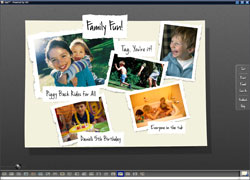
The conversation ranged over the whole history of our project: our Scrum/XP practices, how our team collaborates on user experience, how we created our product vision and our plan to monetize the product.

The three of them were entirely approachable, engaged and enthusiastic. They also came prepared. They’d all downloaded and worked with our application. Henry actually submitted feature suggestions from his team he knows are easy to implement given what we’ve already created.

Katherine helped pull the attendees together and lined up our hands on demo of Surface™. She was interested in figuring how our experiences with Ript™, agile software development and collaborative product ownership might help her enterprise clients. She also asked Gerry how Oxygen approaches advocacy for women, corporate good will and citizenship. Katherine is sharp and conscientious. I could tell Gerry hit it off with her.

Darren described the Developer Platform Evangelists (DPE) programs for joint marketing and developer assistance around products built in WPF and Silverlight. We discussed some of Microsoft’s goals for Silverlight distribution and what Oxygen’s next steps are to engage these resources. Darren is clearly passionate about user experience at the level of product, brand and within an organization. Yet another example of Microsoft going outside its organization to bring in new thinking.

Gerry’s main points were that women are the principle market for consumer technology, that usability testing with women provides valuable insight, how software should playful, purposeful, simple and accessible and how product development should not focus on early adopters but the people who will make up the vast majority of end users should the product be successful.

The conversation also ranged over tech issues. Henry is a fan of our application and left an open door for further communication. He said the .NET team is working on some of our core concerns:

  • breaking up the .NET 3 installer into server and client modules making the package smaller
  • improving the experience of their default install (it plays out like a windows update, hiding itself in the system tray – this is very confusing in an application install process)
  • making it easier for ISV’s to run a silent install and wrap their own UI around the install
  • improving cold start time
  • providing more expressive API’s for automated UI testing

Don’t expect any of this soon unfortunately.

Clearly there are employees at Microsoft in leadership roles determined to engage with and support, not simply consume, innovative work originating outside the company. I had the same impression at the ALT.NET conference earlier this month.

This bodes well for both Microsoft’s future as well as for those of us looking to innovate in the marketplace using their tools and platforms.

  • email
  • Print
  • Digg
  • Reddit
  • StumbleUpon
  • Google Bookmarks
  • del.icio.us
  • LinkedIn
  • Facebook
  • Twitter

Microsoft Surface

Yesterday, I got to sit in while members of Microsoft’s Surface™ team showed my CEO, Gerry Laybourne, a working demo.

Microsoft Surface&tradeI’m a convert. The interface relies on organic human gesture and, more importantly, encourages eye contact and collaboration. Truly beautiful. And the simpler they make it the more emotional and purposeful it will be.

I realize there are similar systems out there but Microsoft’s hardware implementation is novel and potentially more powerful than other multi-touch displays.

Watching Gerry interact with the surface team, I was reminded why she is such a force for invention and creativity. She has an expert’s blink response to new ideas. Her feedback was immediate and unexpected in the best sense. As a Surface™ team member said, “it feels like we’re learning more from you than you are from us.”

  • email
  • Print
  • Digg
  • Reddit
  • StumbleUpon
  • Google Bookmarks
  • del.icio.us
  • LinkedIn
  • Facebook
  • Twitter

Alt.Net Conference

I had the privilege of attending the Alt.Net conference last weekend in Austin.

What I experienced was a happy collision of contrasts: mastery and inexperience, idealism and pragmatism, hope and frustration.

During the conference, the cause lacked coherent expression — though JP Boodhoo, who has a touch of the poet about him and can evoke the beating heart of it. Dave Laribee and others are very articulate in their blogs.

Still you can infer a group’s intent from its actions and over two days here’s what I connected with:

  • Fellowship: Alt.Net is a loose affiliation of master developers who attract others (like me) who wish to learn.
  • Shared Values: These developers aspire to excellence and independent judgement. They embrace passion, courage and honest reflection (articulated by JP). They seek to apply the handiest tool to any given situation and deliver value to their customer.
  • Common Cause: These developers want to bring innovative tools, concepts and practices to the .Net platform whether they arrise from within Microsoft, an open and independent developer community, or other platforms. They are calling on Microsoft’s to introduce these innovations to the larger .Net developer community — or at minimum — to not hinder their use by those who wish to adopt them.
  • email
  • Print
  • Digg
  • Reddit
  • StumbleUpon
  • Google Bookmarks
  • del.icio.us
  • LinkedIn
  • Facebook
  • Twitter
ken h. judyExecutive manager, software developer, father and husband trying to do more good than harm.
Agile is about the material and human good we create when we respect our co-workers, tell truth to our employers, strive to improve, and care for the people affected by the software we help build.
CSPIEEE CSDP

Papers

Presentations


Site menu:


Meta

Creative Commons License
This work is licensed under a Creative Commons Attribution - Noncommercial - Share Alike 3.0 United States License.
Copyright © 2006-2010
Ken H. Judy.
This is a personal weblog. Views expressed are my own and not my employer.